
Prediction Markets Explained: How Polymarket, Kalshi, Predict.fun, Metaculus and Manifold Work
Prediction markets have become one of the most interesting ways to measure public expectations about the future. Instead of relying only on polls, headlines or expert commentary, these platforms allow people to express a probability through a market position, a forecast or a community prediction.
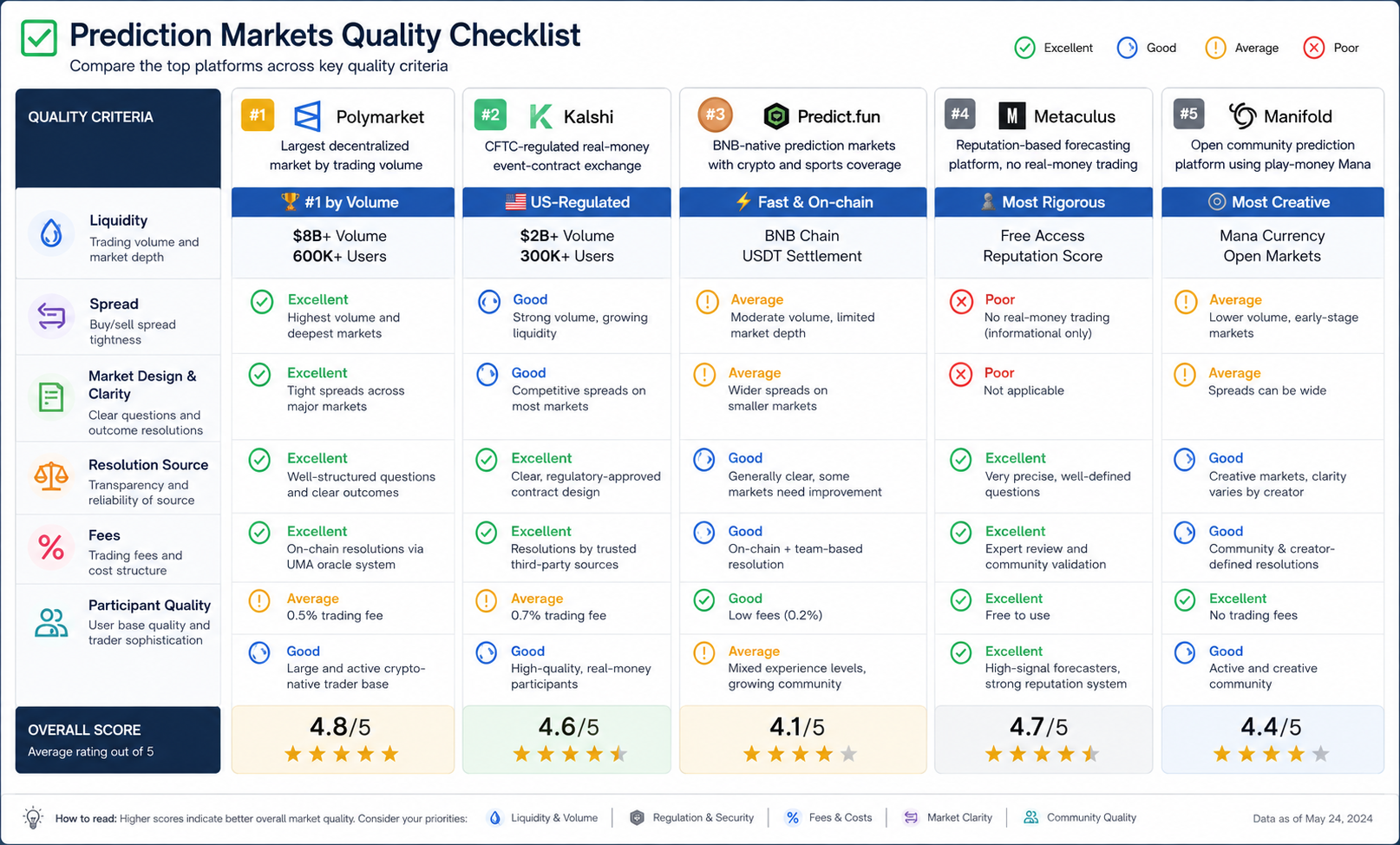
The sector now includes several very different types of platforms. Polymarket brings prediction-market products to users who prefer crypto-based infrastructure, subject to the platform's current geographic and compliance restrictions. Kalshi offers dollar-settled event contracts inside a regulated U.S. exchange structure. Predict.fun focuses on BNB Chain, stablecoins and capital-efficient positions. Metaculus measures forecasting skill, while Manifold gives users a social play-money environment where almost anyone can create a market.
These services are often compared as if they were direct competitors. In reality, they solve different problems. Some are designed for active trading, some for research, some for learning and others for following real-time probabilities around major events. Understanding this difference is more important than simply looking at a ranking.
What Is a Prediction Market?
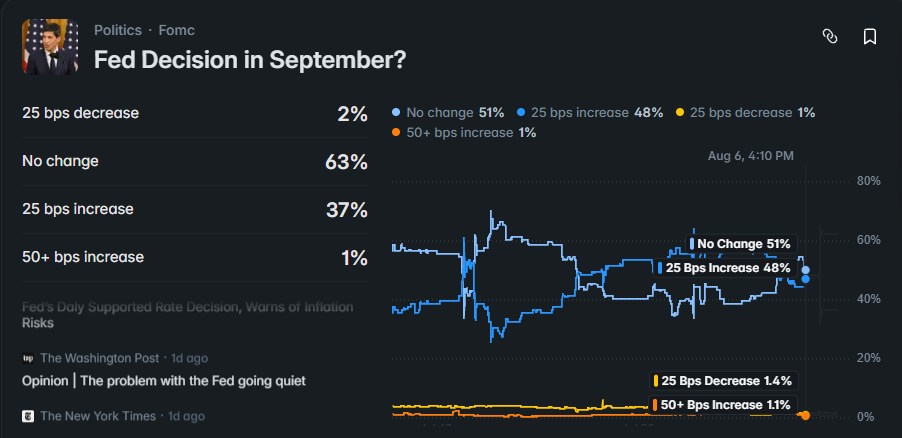
A prediction market is a system in which participants trade positions on defined future outcomes. The price of a tradable outcome can be interpreted as a market-implied probability under that market's rules. Markets differ in what participants put at risk: some use real money or crypto collateral, while play-money markets use virtual currency.
A forecasting platform works differently when users submit probability estimates rather than trade outcome positions. It can combine those estimates into a community forecast and score forecasters after a question resolves. In this guide, Metaculus is the forecasting-platform example; Manifold is a play-money market, while Polymarket, Kalshi and Predict.fun involve real-money or real-collateral positions.
In a simple binary real-money contract that pays $1 if Yes wins and $0 otherwise, a tradable Yes price of $0.70 is commonly read as roughly 70% market-implied probability, before considering fees and the bid-ask spread. This is an interpretation of a market price, not a guarantee that the event will occur.
The difference between a prediction and a market price is important. One person may believe that an event has a 90 percent chance of happening, but the market price is created by all active participants. The final number may reflect better information, worse information, temporary enthusiasm, limited liquidity or a disagreement about the wording of the question.
This is why professional analysis should look beyond the percentage. A price of 65 percent in a deep, active market may be more informative than a price of 80 percent in a thin market with very few participants. Market depth, spread, contract wording, resolution rules and participant quality all influence how much confidence a reader should place in the displayed number.
Why Prediction Markets Matter
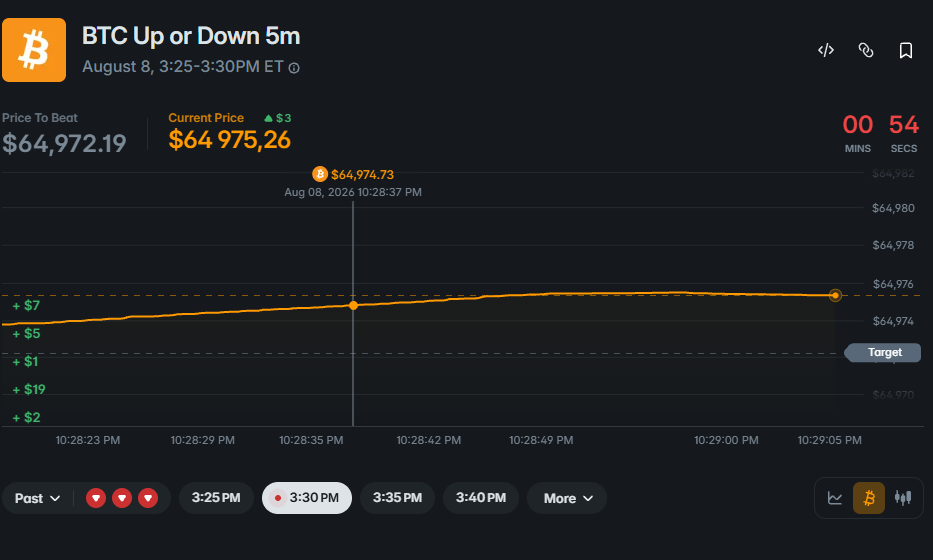
The main value of a prediction market is information aggregation. Individuals often possess small pieces of information that are difficult to collect through a single survey. One participant may follow election data, another may understand economic indicators and a third may track technical developments in a particular industry.
When these people participate in the same market, their separate views can be reflected in one constantly updated price. The process is not perfect, but it can be useful because participants have a reason to update their position when their assessment changes.
This incentive is one of the most important differences between a market and an ordinary comment section. In a discussion, a person can make a confident claim and never return to check whether it was correct. In a market or a scored forecasting system, the participant's position can be evaluated later.
The best platforms therefore create some form of accountability. Kalshi uses event contracts with defined settlement rules. Polymarket uses tradable outcome positions and a formal resolution process. Metaculus measures forecast performance against baseline and peer scores. Manifold uses a social market structure where users can create and resolve questions under stated rules.
Prediction Markets Are Not Ordinary Polls
A poll asks respondents about their views or intentions. A prediction market allows participants to trade positions on an outcome, producing a market-implied probability. On a forecasting platform, participants instead submit and update their own probability forecasts. These are three different ways of gathering information.
This produces a different type of information. A poll may tell us that 48 percent of respondents support a candidate. A market may show that participants assign a 62 percent probability to that candidate winning. These numbers answer different questions and should not be treated as interchangeable.
| Tool | What it measures | Can update continuously? | Participant incentive |
|---|---|---|---|
| Opinion poll | Respondent opinion or intention | Usually no | Answering the survey |
| Expert forecast | One specialist's probability estimate | Sometimes | Reputation or professional value |
| Prediction market | Aggregated market-implied probability | Yes | Financial or virtual position |
| Forecasting community | Aggregated individual forecasts | Yes | Scoring, reputation and learning |
In my opinion, this distinction explains why all five platforms deserve attention. They are not just websites where users “bet on news.” They are different experiments in turning uncertainty into a measurable signal.
A Short History of Prediction Markets
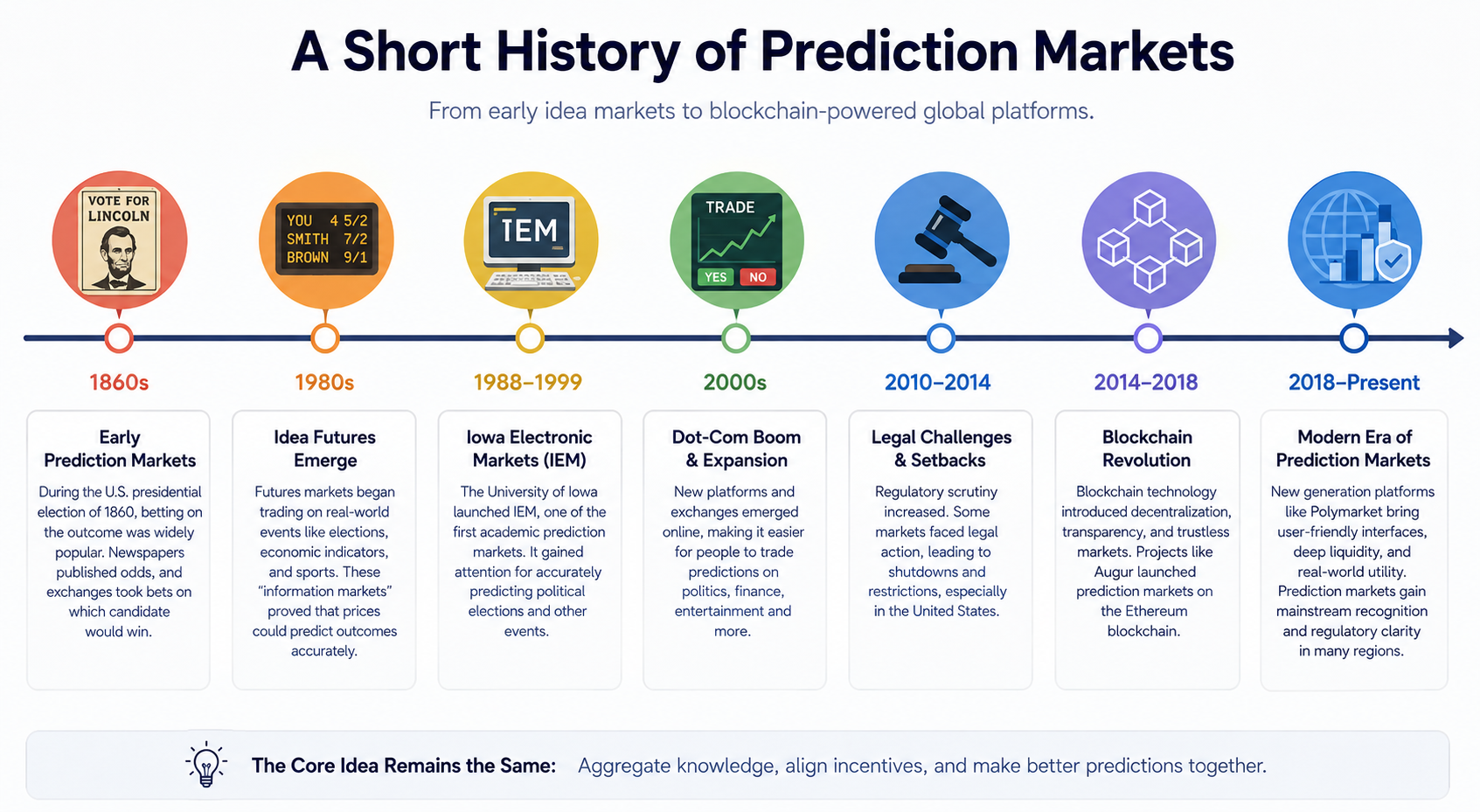
Prediction markets did not begin with today's crypto platforms. One early research example is the Iowa Electronic Markets (IEM), developed by faculty at the University of Iowa. The university dates the project to 1988 and describes it as a teaching and research tool where participants trade real-money contracts tied to outcomes such as elections and economic events.
The IEM illustrates the basic idea behind a trading-based forecast: participants can express different expectations by buying and selling contracts, and the resulting prices provide an observable signal. That signal is not automatically accurate. Its usefulness depends on the market's design, participants, available information and the question being forecast. In their 2004 review of prediction markets, Justin Wolfers and Eric Zitzewitz examined how markets aggregate dispersed information and discussed the importance of contract design.
One study provides a more specific test. Joyce E. Berg, Forrest D. Nelson and Thomas A. Rietz compared IEM vote-share forecasts with 964 national polls across five U.S. presidential elections from 1988 to 2004. In that sample, the market forecast was closer to the eventual two-party vote split 74% of the time. This is evidence about those elections and that type of market, not proof that every prediction market will outperform polls or expert forecasts. Read the study's abstract and publication details.
The platforms in this guide show how the idea later took different forms. Metaculus describes itself as a forecasting platform that aggregates individual predictions. Manifold allows community-created markets using play-money Mana. The CFTC designated KalshiEX as a contract market in 2020. Polymarket describes peer-to-peer trading with blockchain settlement, while Predict.fun describes yield-bearing markets that route eligible collateral through Venus Protocol.
These are different approaches, not successive versions of one product. A reader comparing them should distinguish a tradable market price from an aggregated forecast, and a real-money contract from a play-money market. Their different incentives and resolution rules affect what each displayed probability means.
How Prediction Markets Work in Practice
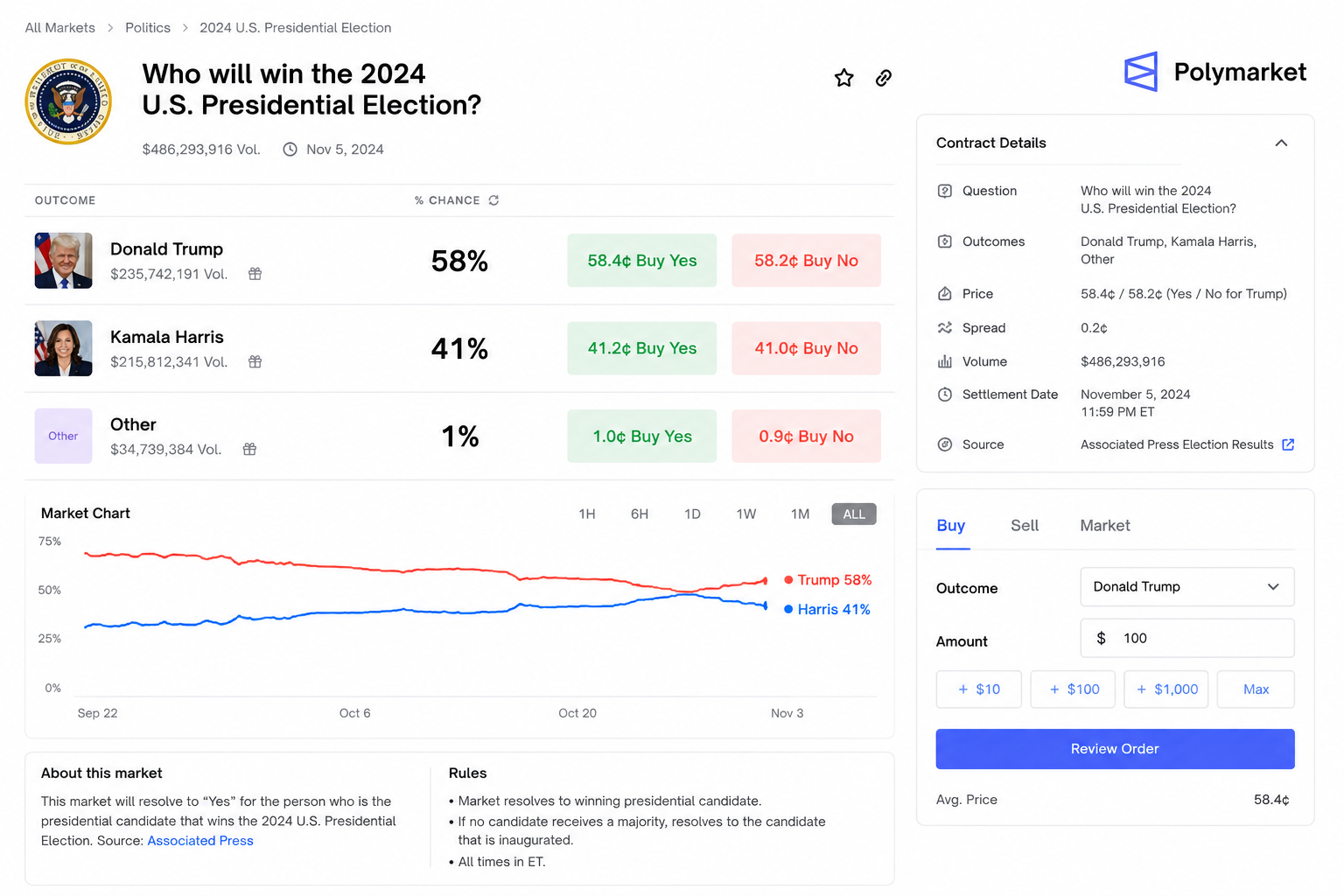
Before comparing individual websites, it helps to understand the basic lifecycle of a market. First, the platform creates or approves a question. Second, participants submit forecasts or orders. Third, the market price changes as people trade or update their predictions. Finally, the platform determines the result according to the published resolution rule.
- The question is written. The wording must define the event, the relevant time period and the exact condition that determines the answer.
- Possible outcomes are listed. A binary market may have Yes and No outcomes, while other markets can include several mutually exclusive results.
- Participants submit positions or forecasts. Depending on the platform, they may trade contracts, buy outcome shares or enter a probability estimate.
- The market price evolves. New information, trading volume and changes in sentiment can move the displayed probability.
- The event is resolved. The platform uses the stated data source, oracle process or community rule to determine which outcome occurred.
- Winning positions are scored or settled. Real-money markets pay according to their rules. Forecasting platforms update scores. Play-money platforms update virtual balances.
Why Resolution Rules Are So Important
The resolution rule is the legal and technical foundation of a market. A question can appear obvious until the reader asks what happens if the official data is revised, the event is cancelled, the result is delayed or two reliable sources disagree.
Experienced users read the resolution criteria before entering a position. They check the exact source, cutoff time, time zone, wording of the outcome and process for disputes. This may feel overly cautious, but many disagreements in prediction markets are not really about the event itself. They are about what the contract promised to measure.
How to Read Market Prices Correctly
A market-implied probability is an interpretation of a tradable price, not a certainty or an independently verified chance of an event occurring. In a simple binary contract paying $1 for Yes, a price around $0.70 is commonly read as roughly 70% before accounting for fees and spread. A forecast probability is different: it is the percentage a forecaster assigns to an outcome, whether or not anyone can trade at that percentage.
The difference between a displayed price and the price available for a real order is also important. A market may show a headline probability of 70 percent, but a large order could move the price if there are not enough offers near that level. This is why volume alone is not enough. Depth and spread often tell a more useful story about execution quality.
| Question | Why it matters |
|---|---|
| How liquid is the market? | Thin markets can move sharply after a small order. |
| How wide is the spread? | A wide spread means the visible price may be less precise. |
| Who participates? | Specialists, traders and casual users may create different signals. |
| Is the wording precise? | Ambiguous questions produce ambiguous outcomes. |
| What is the resolution source? | The final result depends on the stated official evidence. |
To assess a displayed probability, compare the available price, spread, order-book depth, resolution rule and relevant news. A large price move in a thin market calls for more caution than the headline percentage alone suggests.
Four Different Platform Models
The five platforms can be understood through four broad models. These categories overlap, but they make the comparison easier to follow.
| Model | Platforms | Main user motivation |
|---|---|---|
| Crypto-based prediction market | Polymarket and Predict.fun | Trade live event probabilities using crypto infrastructure |
| CFTC-designated event-contract exchange | Kalshi | Trade dollar-settled contracts in a formal U.S. framework |
| Forecasting and scoring platform | Metaculus | Improve calibration and measure forecasting skill |
| Community-created play-money market | Manifold | Create questions, practise forecasting and join communities |
The next sections examine each platform separately. I will not use the same template repeatedly or pretend that every platform should be judged by identical criteria. Polymarket needs to be evaluated through liquidity and blockchain settlement. Kalshi requires attention to regulation and contract design. Predict.fun is best understood through its BNB-native ecosystem and capital-efficiency features. Metaculus should be judged by forecasting quality, while Manifold is strongest when evaluated as a social learning environment.
Practical Questions Before Choosing a Platform
What is a good starting point for beginners?
If you want to learn without depositing money, start with Metaculus to practise probability forecasts or Manifold to explore play-money markets. If you later consider a real-money platform, read the contract's resolution rules, fees and eligibility requirements first.
Which option offers regulated dollar event contracts?
Kalshi operates through KalshiEX LLC, which the CFTC designated as a contract market in 2020. That describes the exchange's regulatory status; it does not make a contract risk-free or establish that every visitor can trade.
Which platforms use crypto infrastructure?
Polymarket and Predict.fun use crypto-based infrastructure, but their collateral, networks, account flows and risks differ. “Crypto-based” is not the same as “available everywhere”: check each platform's current geographic rules before using it.
How does a prediction market differ from betting?
Both can involve risking money on an uncertain outcome. The practical differences depend on the particular product: who sets the price, whether participants trade with each other or against a bookmaker, how the outcome is resolved, and which rules govern the service. A label alone does not decide its legal status. The CFTC's explanation of event contracts describes how regulated U.S. event-contract markets work.
How does a forecasting platform differ from a market?
A market price emerges from participants trading positions. On Metaculus, users instead submit probability forecasts that are aggregated and scored. Manifold has markets, but they generally use play-money Mana rather than ordinary cash-settled positions.
Are prediction markets legal in my country?
There is no reliable worldwide yes-or-no answer. Availability depends on local law, the platform's terms, your location and the product you want to use. Being able to view a market does not necessarily mean you can place an order. Check the provider's current eligibility rules and applicable local requirements before trading.
Which platforms are available in Europe?
Europe is not one trading jurisdiction, and none of these real-money services should be described as available across the whole region. Kalshi says eligible users can trade from many countries, subject to its member agreement and identity checks. Polymarket lists restrictions affecting several European countries and distinguishes full blocks from close-only access. Predict.fun's terms also restrict trading from specified jurisdictions. Check your country, physical location and the current product rules separately; do not use a VPN to bypass them.
Polymarket vs Kalshi: what is the main difference?
Polymarket uses crypto-based trading infrastructure and on-chain collateral; Kalshi offers dollar-denominated event contracts through a CFTC-designated exchange. Neither is universally “better”: compare eligibility, the specific event, order-book depth, fees, funding route and resolution rules before deciding. See the Polymarket review and Kalshi review.
What fees should I compare?
Compare the fee shown for the specific trade, the bid-ask spread, funding and withdrawal costs, and any blockchain or conversion charges. Some Polymarket markets have taker fees; Kalshi's fees depend on the trade and market; and Predict.fun distinguishes gasless trading from taker fees. The lowest advertised fee does not necessarily produce the lowest total cost.
How should I read an implied probability?
In a simple binary contract that pays $1 for a winning outcome, a Yes price of $0.65 is commonly read as roughly 65% market-implied probability before adjusting for trading costs. It is a reading of that market at that moment, not a guarantee or an independently verified chance of the event occurring. Check the price at which you can actually trade, the spread and the resolution rule. See the detailed explanation.
What is the safer way to start?
There is no risk-free real-money prediction market. Begin with a free forecasting or play-money service if you want to learn. Before risking money, confirm that you are eligible, read the full contract, check fees and liquidity, verify the official site and funding details, and use only an amount you can afford to lose. The CFTC's customer guidance likewise emphasises contract terms, costs and risk capital.
Polymarket Review: Trading, Liquidity, Fees and Risks
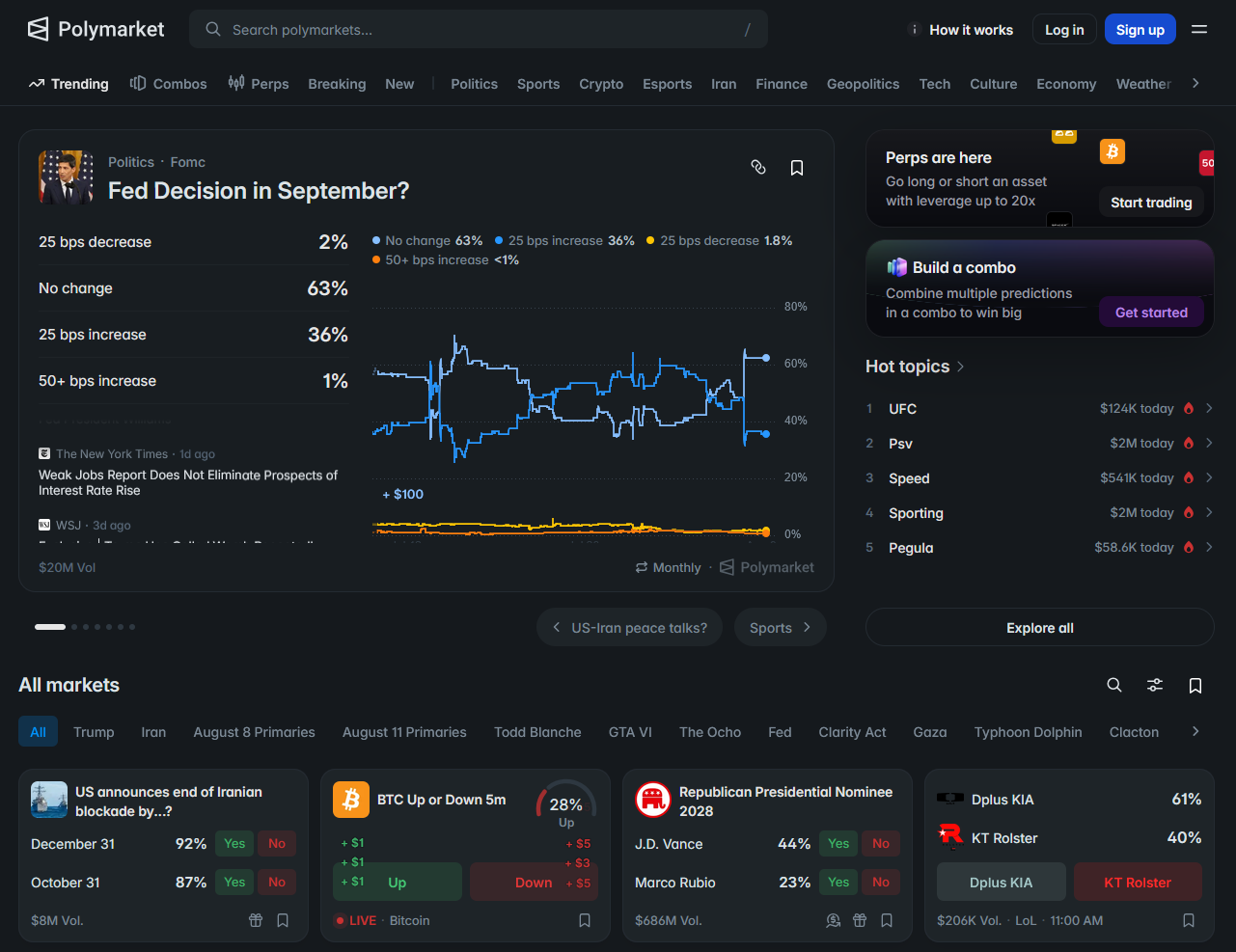
Polymarket is the first platform discussed in this comparison where the combination of public attention and crypto-native infrastructure becomes impossible to ignore. It has made prediction markets visible to users who may never have visited an academic forecasting website or a traditional event exchange.
The platform's main proposition is straightforward: users can buy and sell positions connected to future outcomes, while the market price reflects the current balance of expectations. The available subjects are broad, and the most visible markets often involve elections, economic decisions, crypto events, geopolitics, sports and major cultural news.
Polymarket's documentation describes a peer-to-peer central limit order book. Users trade against other users rather than against a conventional bookmaker. This is a meaningful structural advantage because the price can emerge from direct interaction between participants with different information and risk preferences.
The platform also uses a hybrid architecture: orders can be matched through an off-chain system for speed, while completed trading activity is settled on-chain. That approach is technically more practical than forcing every order-book update to wait for a blockchain confirmation.
Who Polymarket Is Best Suited For
Polymarket is best suited to users who already understand or are willing to learn stablecoins, wallet security, network selection and on-chain settlement. It is also attractive to international users in eligible jurisdictions who want to follow markets that may not be available on a domestic regulated exchange.
Geographic eligibility is not the same worldwide. Polymarket's geographic-restrictions documentation distinguishes locations where order placement is blocked from locations where users may only close existing positions. Restrictions can also apply to particular regions within a country. Check the current rules for your physical location before attempting to trade; do not assume that access to a website means permission to place an order. Documentation checked September 29, 2026.
It is less suitable for someone who wants the simplicity of depositing dollars through a normal bank account and immediately trading without thinking about wallets. That does not make Polymarket inferior. It means that the platform's user experience is built around a different set of priorities.
In the next section of this analysis, Polymarket will be examined in more detail: its history, market mechanics, liquidity, fees, resolution process, main advantages and the areas where a careful user should remain cautious.
Polymarket: Order Book, Liquidity and Resolution
Polymarket emerged from the idea that blockchain infrastructure could make prediction markets more accessible, transparent and global. The platform did not invent the concept of event forecasting, but it changed the way many internet users encountered it. Instead of presenting prediction markets as an academic experiment or a specialist financial product, Polymarket placed them inside a modern, continuously updated web interface.
That change in presentation was strategically important. Users do not need to read an academic paper before seeing that a market assigns a probability to an election, a central-bank decision or a cryptocurrency event. The probability is visible immediately, and the surrounding activity creates a sense that the market is alive. For many people, that visual simplicity is the first step toward understanding how event contracts work.
The platform's growth also benefited from the fact that its markets can become part of a wider news cycle. When a market moves sharply, journalists, analysts and social-media users may discuss the change. This produces a useful feedback loop: public attention brings more participants, more participants can improve liquidity and greater liquidity makes the displayed price more useful to observers.
The same feedback loop has a possible weakness. A market that receives intense attention can also become more reactive to headlines, rumours and short-term sentiment. Visibility is an advantage, but it does not automatically equal accuracy. Public attention may attract participants, but it is not evidence that a market has assessed the event correctly.
Polymarket's Central Limit Order Book
A central limit order book, usually abbreviated as CLOB, is a system where users submit bids and offers at specific prices. Someone who wants to buy may post an order at a chosen price. Someone who wants to sell can accept an existing bid or place a new offer. When the prices match, the trade is executed.
This structure is different from a simple fixed-price interface. A fixed-price product may show one price determined by a platform or automated formula. An order book shows the interaction between multiple participants. It gives the user more information about demand, supply, spread and the amount of liquidity available near the headline price.
Polymarket describes its CLOB as a hybrid-decentralized system. In practical terms, the order-matching layer is designed for speed, while settlement uses blockchain contracts. This approach tries to preserve a familiar trading experience without giving up all the transparency associated with on-chain infrastructure.
Liquidity Is More Important Than Headline Volume
Polymarket is often discussed through volume because volume is easy to display and easy to compare. However, volume alone does not tell the full story. A market can have significant historical volume and still have limited liquidity at the exact moment a user wants to trade.
Liquidity describes how much can be bought or sold without moving the price too far. A liquid market usually has more orders near the current price, a narrower spread and less slippage for ordinary trades. A thin market may show a precise-looking probability while a relatively small order changes that probability substantially.
For this comparison, it is useful to separate three concepts when evaluating a prediction market:
- Volume: how much trading has taken place over a defined period.
- Liquidity: how much capital is available near the current price.
- Spread: the difference between the best available buy and sell prices.
Polymarket is particularly strong when these qualities appear together on major markets. Large, widely followed events tend to attract more participants and more orders. Smaller or highly specialised questions should be analysed with more caution, even if their displayed percentage looks authoritative.
| Check | What to look for | Why it matters |
|---|---|---|
| Question wording | Clear outcome and defined time period | Prevents disputes about what the market measures |
| Resolution source | Specific official source or oracle process | Shows how the final result will be determined |
| Spread | Small difference between buy and sell prices | Usually indicates easier execution |
| Depth | Several orders close to the current price | Reduces the impact of a normal-sized trade |
| Time remaining | Enough time for new information to arrive | Short deadlines can increase volatility |
Fees, Wallets and On-Chain Friction
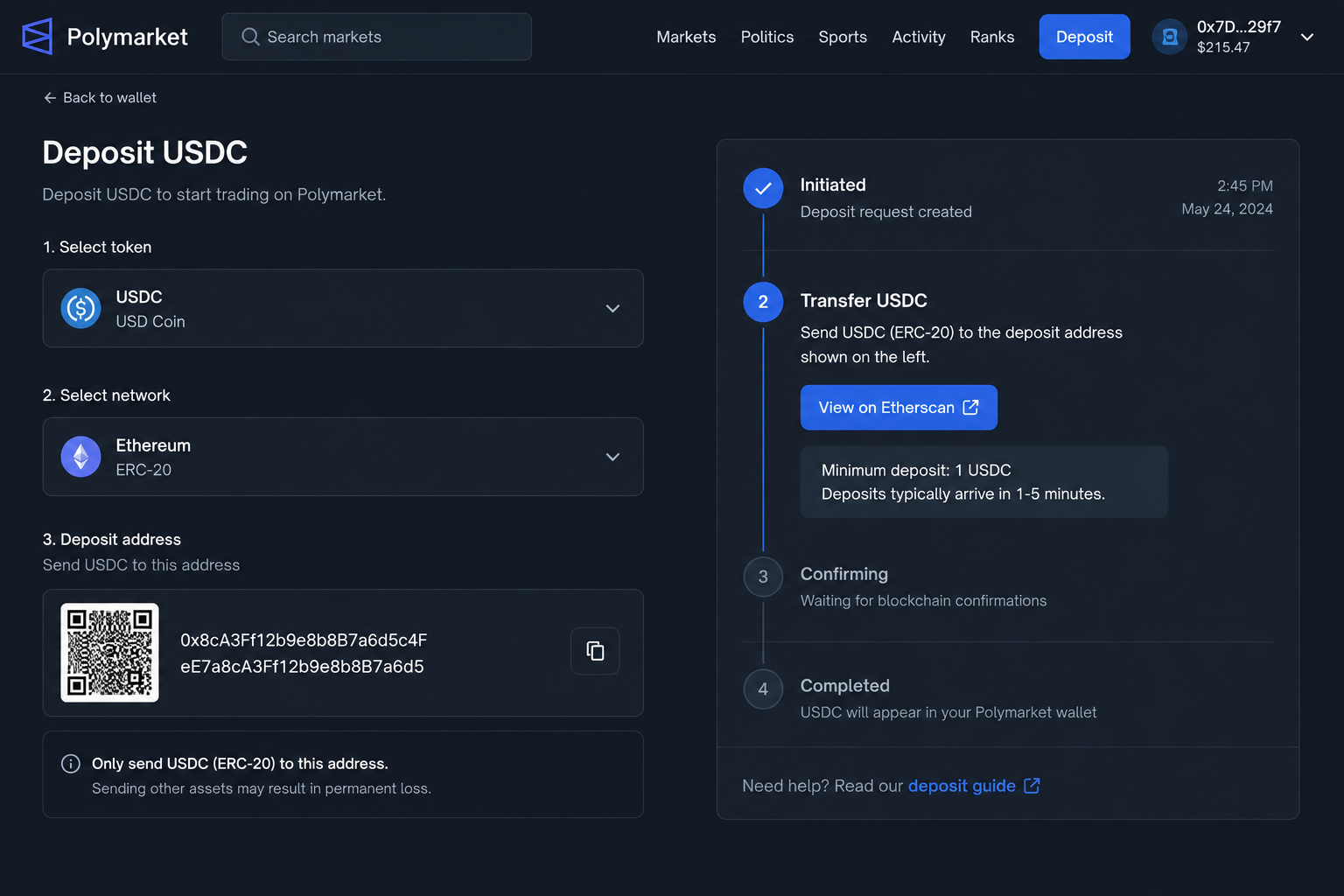
The main advantage of an on-chain prediction market is also one of its main responsibilities. Users gain access to stablecoin-based infrastructure and wallet settlement, but they must pay closer attention to transaction details than they would on a conventional financial application.
The safest habit is to use the current deposit screen rather than an old tutorial. Platforms can change collateral tokens, bridge routes, supported networks and account flows. Polymarket's current documentation describes pUSD as the collateral token used for trading on Polygon and explains that it is backed by USDC.
A user should therefore confirm four details before sending funds: the exact asset, the exact network, the destination address and the minimum deposit requirement. A screenshot from a previous version of the website may be visually attractive but technically outdated.
Costs vary by market and funding route. Polymarket's trading-fee documentation says that takers pay fees in certain market categories, while makers are not charged a trading fee; geopolitical and world-events markets have no Polymarket trading fee under the published schedule. Spreads and charges from payment, conversion or bridging providers can still affect the total cost. Check the specific market and deposit route before placing an order. Documentation checked September 29, 2026.
Polymarket Resolution and User Trust
Resolution is the moment when the market stops being a probability estimate and becomes a final result. Polymarket's documentation explains that a resolved market determines which outcome won and allows winning positions to be redeemed according to the contract rules.
The key word is “rules.” A market about an election may sound simple, but questions can arise if the result is challenged, if a candidate withdraws, if an official source changes its data or if the event happens outside the stated time window. Professional users read the resolution criteria before they trade, not after a disagreement has already started.
Polymarket's resolution documentation describes a proposal-and-dispute process using UMA's Optimistic Oracle. A proposed result can be challenged, and a disputed market can take longer to settle. On-chain resolution provides a documented process, but it does not eliminate oracle, smart-contract or disputed-outcome risk. Read the individual market's resolution source and edge-case rules before trading. Documentation checked September 29, 2026.
I consider this one of Polymarket's strongest educational features. The platform shows users that a prediction is not only about being right in a general sense. It is about defining a measurable event precisely enough that two reasonable people can agree on the final outcome.
Polymarket: Final Professional Assessment
For readers who prioritise crypto-based event trading and broad topic coverage, Polymarket is a relevant option in this comparison. That assessment is based on its documented market model and the event categories discussed above; it is not a measured claim that Polymarket has the best liquidity or execution in every market.
Its weaknesses are mostly connected to the same architecture that creates its advantages. Wallet management, network selection, stablecoin transfers and geographical restrictions create more responsibility for the user. These are not reasons to dismiss the platform, but they are reasons to avoid presenting it as a completely frictionless beginner product.
Eligible readers familiar with crypto wallets may find Polymarket useful for observing prices around widely followed events. Whether a particular market is worth trading depends on its current spread, depth, fees and resolution terms, none of which a platform-wide verdict can settle.
“Polymarket is strongest when the question is important, the market is liquid and the participant understands the settlement rules.”
— James Whitfield, PredictChoice analysisKalshi Review: Regulation, Contracts, Fees and Funding
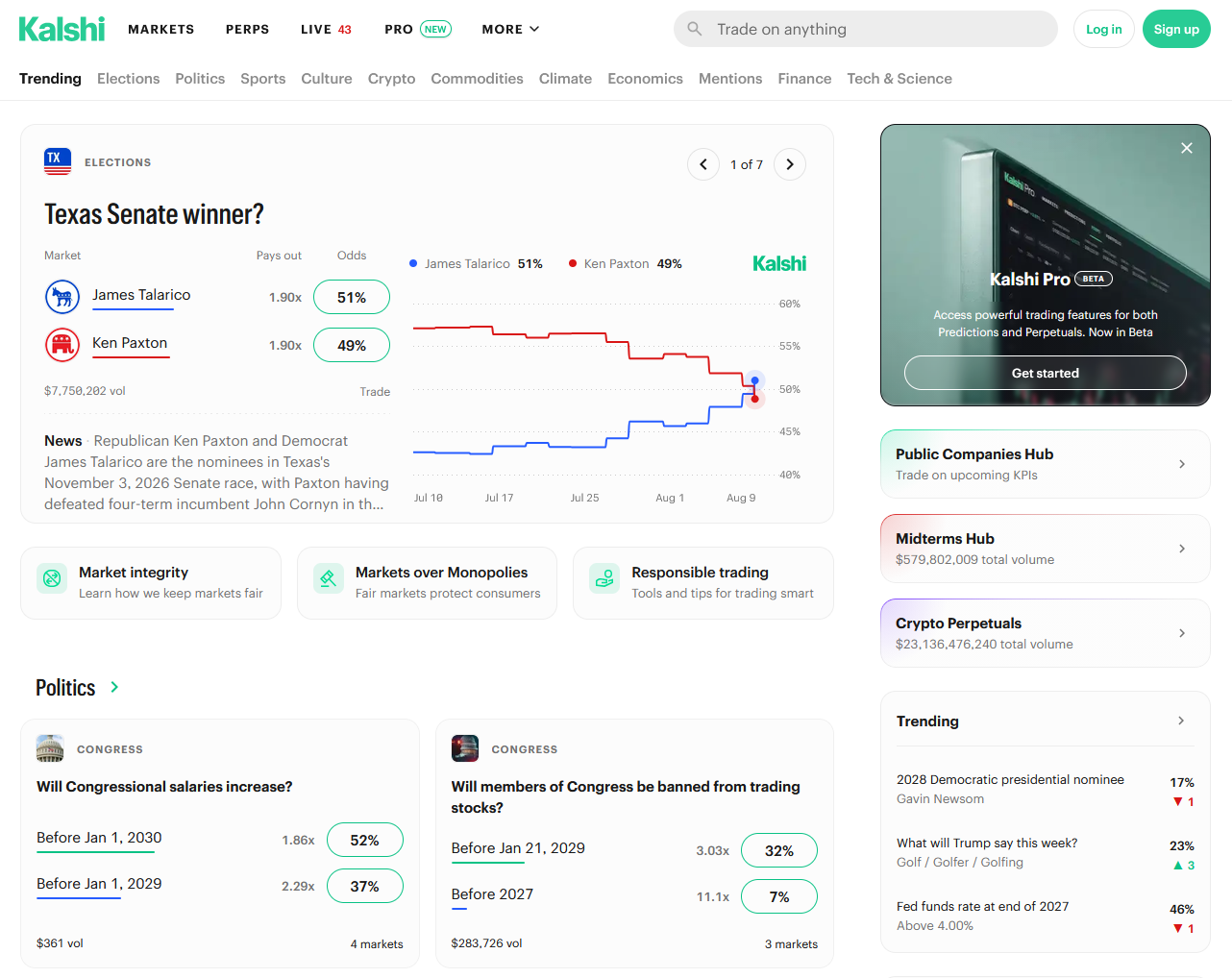
Kalshi represents a different answer to the prediction-market problem. While Polymarket is associated with blockchain settlement and stablecoin-based access, Kalshi is built around a regulated exchange structure and dollar-settled event contracts.
In November 2020, the U.S. Commodity Futures Trading Commission granted KalshiEX LLC designated contract market (DCM) status.
That background matters because Kalshi's identity is not simply “Polymarket with dollars.” Its entire user experience is organised around the expectations of a regulated financial marketplace: account verification, eligibility rules, contract specifications, official settlement sources and conventional funding methods.
What Kalshi Event Contracts Represent
Kalshi event contracts are generally built around a clearly defined future outcome. A contract may ask whether a certain economic figure will reach a specified range, whether a political event will occur or whether another measurable result will be recorded before a stated deadline.
Contracts are priced between zero and one dollar. A contract trading at $0.65 can be read as a market-implied probability of approximately 65 percent, although the same professional cautions still apply: price is affected by liquidity, order flow, fees and the information available to participants.
If the contract resolves in the user's favour, the winning contract pays according to the rules. If it resolves against the user's position, the contract does not produce the expected payout. The simplicity of this structure is one reason Kalshi can be easier for a traditional finance user to understand than a wallet-based blockchain market.
Kalshi: Eligibility, Settlement, Fees and Funding
Kalshi was founded in 2018 by Tarek Mansour and Luana Lopes Lara, who met while studying at the Massachusetts Institute of Technology. In 2020, the company became a federally regulated Designated Contract Market under the Commodity Futures Trading Commission. That status is central to the platform's identity and distinguishes Kalshi from crypto-native prediction markets.
In November 2020, the U.S. Commodity Futures Trading Commission designated KalshiEX LLC as a designated contract market (DCM).
Regulation does not mean that every trade is safe or that every market prediction will be correct. It means that the exchange operates within a defined legal and supervisory framework. Users still need to understand contract rules, fees, eligibility and the risks of taking a position on an uncertain event.
DCM status describes the exchange's regulatory framework; it does not guarantee a profitable trade or make an event contract equivalent to a bank deposit. Eligibility, available markets and payment methods must be checked separately. International access is subject to Kalshi's membership and geographic requirements, including identity verification during signup. Read the rules of the specific contract before taking a position. Kalshi's international eligibility guidance was checked September 29, 2026.
In practical terms, Kalshi presents itself more like an exchange than a betting website. The platform matches participants with different opinions about an event. Kalshi's own help materials describe this structure as similar to a stock exchange for event contracts: users trade with one another, while the platform provides the market infrastructure.
Why Regulation Changes the User Experience
The regulatory framework affects almost every part of the product. Users should expect identity verification, account eligibility rules, defined contract specifications and formal procedures for deposits, withdrawals and settlement. This can create more onboarding steps, but it also makes the platform feel familiar to users who already understand financial exchanges.
Kalshi's regulated exchange structure is only one part of the comparison. Dollar settlement, exchange-style pricing, a documented order book and conventional funding methods also shape the user experience. These characteristics can matter to readers who do not want to manage blockchain wallets.
Kalshi's Yes and No Contracts
A typical Kalshi contract asks a clearly defined Yes-or-No question. The contract price is connected to the market's perceived probability of the event. A price of 30 cents can be read as a market-implied probability of approximately 30 percent, while a price of 70 cents suggests approximately 70 percent.
The price is not selected by a commentator or by a fixed house schedule. It changes as participants place orders and update their views. If new economic data changes expectations about an interest rate, the related market can move. If a political development changes the perceived likelihood of an event, the price can react before a final outcome is known.
This makes Kalshi useful as an information dashboard even for people who do not trade actively. A reader can observe how a market changes over time and compare that movement with news, polling, official statistics or other research.
How Kalshi Settles a Market
A Kalshi market settles when the official outcome is confirmed and the market's result is finalised according to its published rules. Winning contracts are then paid to the cash balance in accordance with the contract structure.
The practical lesson is the same as with Polymarket: read the contract before trading. The event title is not enough. A market about inflation, rainfall, an election or a sports result may depend on a particular agency, measurement method, publication date or official revision.
Kalshi's regulated environment may make the process feel more formal, but formal does not mean self-explanatory. The user should still verify the settlement source and understand what will happen if a number is revised, an event is postponed or an official result is disputed.
Kalshi Fees and Funding
Kalshi makes money primarily through transaction fees rather than taking a position on the outcome of the event. The platform's help documentation explains that fees are calculated in relation to the expected earnings of a contract. Some markets can also include maker fees for resting orders that are eventually executed.
This fee structure deserves attention because the same percentage does not have the same practical effect on every trade. A user should look at the fee information displayed beside the order before submitting it. The contract price, order size, market type and whether the order is immediately matched can all affect the final cost.
Kalshi lists debit cards, ACH bank transfers, PayPal, Venmo, Cash App, cryptocurrency and wire transfers among its funding methods, but availability depends on the account and location. According to Kalshi's transfer FAQ, Cash App is for deposits only. International accounts may use debit cards, cryptocurrency or wire transfers for deposits, subject to eligibility; ACH, PayPal, Venmo and Cash App are unavailable for international accounts. Check the methods and any charges shown in your own transfer screen. Documentation checked September 29, 2026.
| Method | Best suited for | Important consideration |
|---|---|---|
| Debit card | Fast initial deposits | Availability and limits may depend on account details |
| ACH transfer | Regular U.S. bank funding | Settlement timing can differ from instant card deposits |
| PayPal or Venmo | Users who prefer familiar payment apps | Some services may be U.S.-only |
| Crypto | Users already holding digital assets | Supported assets and withdrawal rules must be checked |
| Wire transfer | Larger or formal account transfers | Transfer instructions must match account ownership |
Where Kalshi Is Strongest
Kalshi is strongest when the user values clarity over maximum flexibility. The platform does not try to become every type of forecasting community at once. It focuses on event contracts, exchange mechanics, dollar settlement and a regulated structure.
This focus is visible in the design of the markets. Economic indicators, interest rates, employment data, government decisions and other measurable events fit naturally into the platform's framework. Users can connect a contract price with a defined question and a defined settlement outcome.
I also consider Kalshi a strong platform for people who want to compare market expectations with traditional economic information. A user can observe a market about inflation or interest rates and then compare it with official releases, analyst forecasts and historical data.
The limitation is that regulation naturally creates boundaries. A regulated exchange cannot list every imaginable question without considering legal, compliance and contract-design issues. As a result, Kalshi may feel less open-ended than Manifold and less globally flexible than an on-chain platform.
“Kalshi's advantage is not that it removes uncertainty. Its advantage is that it gives uncertainty a familiar exchange structure.”
— James Whitfield, PredictChoice analysisKalshi: Final Professional Assessment
Kalshi may suit eligible users who want a regulated event-contract exchange with dollar settlement and supported conventional payment methods. It is especially attractive to beginners who understand the idea of buying a Yes or No position but do not want to begin with a crypto wallet.
My assessment is clearly positive. Kalshi has taken a complicated idea and presented it in a relatively understandable structure. The platform is not as open-ended as Manifold, not as crypto-native as Polymarket and not as research-oriented as Metaculus. That is not a weakness by itself. It shows that Kalshi has chosen a specific product identity and built around it.
The main thing I would ask a new user to check is the fee information and geographical eligibility before depositing. Once those details are understood, the platform becomes one of the clearest entry points into real-money prediction markets.
Predict.fun Review: Wallets, Deposits, Yield and Risks
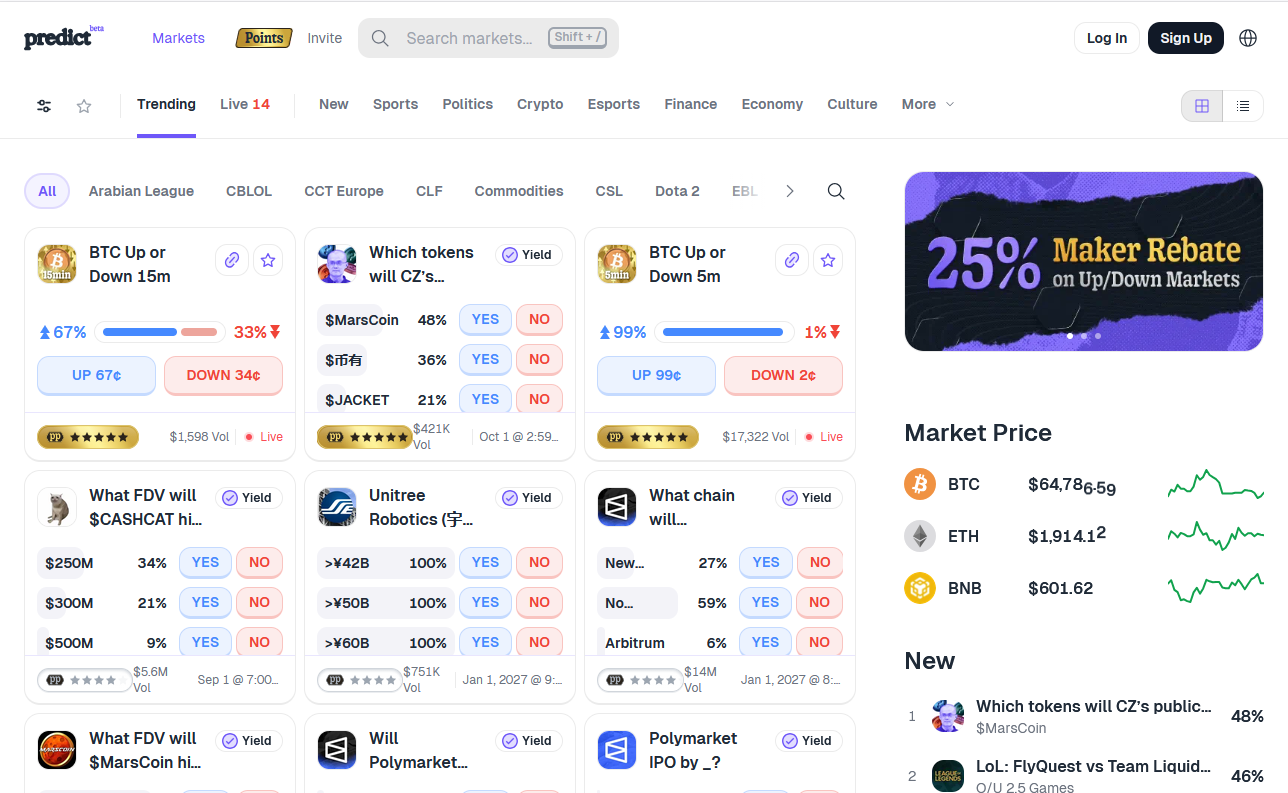
Predict.fun represents a newer generation of prediction-market platforms. It positions itself as a BNB-native venue where users can trade on politics, sports, crypto and current affairs. Its product is designed for users who are already comfortable with stablecoins, digital wallets and blockchain-based applications.
Predict.fun is not simply trying to copy Polymarket on a different network. Its most distinctive idea is capital efficiency. According to the platform's official materials, eligible open positions can earn yield through an integration with Venus Protocol while the market remains unresolved.
This feature changes the risk and opportunity-cost profile of collateral held in an unresolved position. In a traditional event position, the capital may remain committed until the market resolves. Predict.fun's model attempts to put eligible collateral to work during that waiting period. The important word is “eligible”: yield is not automatically available for every market or every position.
How Predict.fun Is Different from Polymarket
Both platforms use crypto-native infrastructure, but their emphasis is different. Polymarket has a strong reputation for broad public visibility and major global event markets. Predict.fun focuses more heavily on the BNB ecosystem, stablecoin access, short-duration opportunities and the possibility of yield on eligible open positions.
This creates a different user profile. Someone who wants to follow the most visible election or geopolitical markets may naturally begin with Polymarket. Someone who already uses BNB Chain or Binance Wallet and is interested in crypto-oriented event markets may find Predict.fun more natural.
Predict.fun's own documentation describes Binance Wallet integration and supported wallet-based access. This may reduce setup steps for eligible users who already use that ecosystem, but the practical flow, available assets and regional access should be confirmed in the current account interface.
Deposits, Supported Assets and Wallet Experience
Predict.fun's deposit guide distinguishes between funding routes. Its Predict Smart Wallet address on BNB Chain accepts USDT, while its Global Deposit Address accepts supported USDT and USDC transfers from several networks. Do not send BNB or another unsupported asset merely because the product operates on BNB Chain. Confirm the token, network and destination shown for your selected route before transferring funds. Documentation checked September 29, 2026.
The platform also promotes a route that can be used without a separate traditional Web3 wallet, depending on how the user accesses the service. Binance Wallet integration and supported on-ramp providers can make the first deposit less intimidating than a pure self-custody flow.
At the same time, users should not assume that every payment method is available in every country. Card payments, bank transfers and other fiat routes may be handled by third-party providers, and their availability can change according to region, compliance requirements and provider policy.
The most sensible approach is to treat the deposit screen as the final source of truth. Guides and comparison articles are useful for understanding the platform, but the current account interface should decide which assets and networks are safe to use.
Predict.fun: Yield, Trading Fees and DeFi Risks
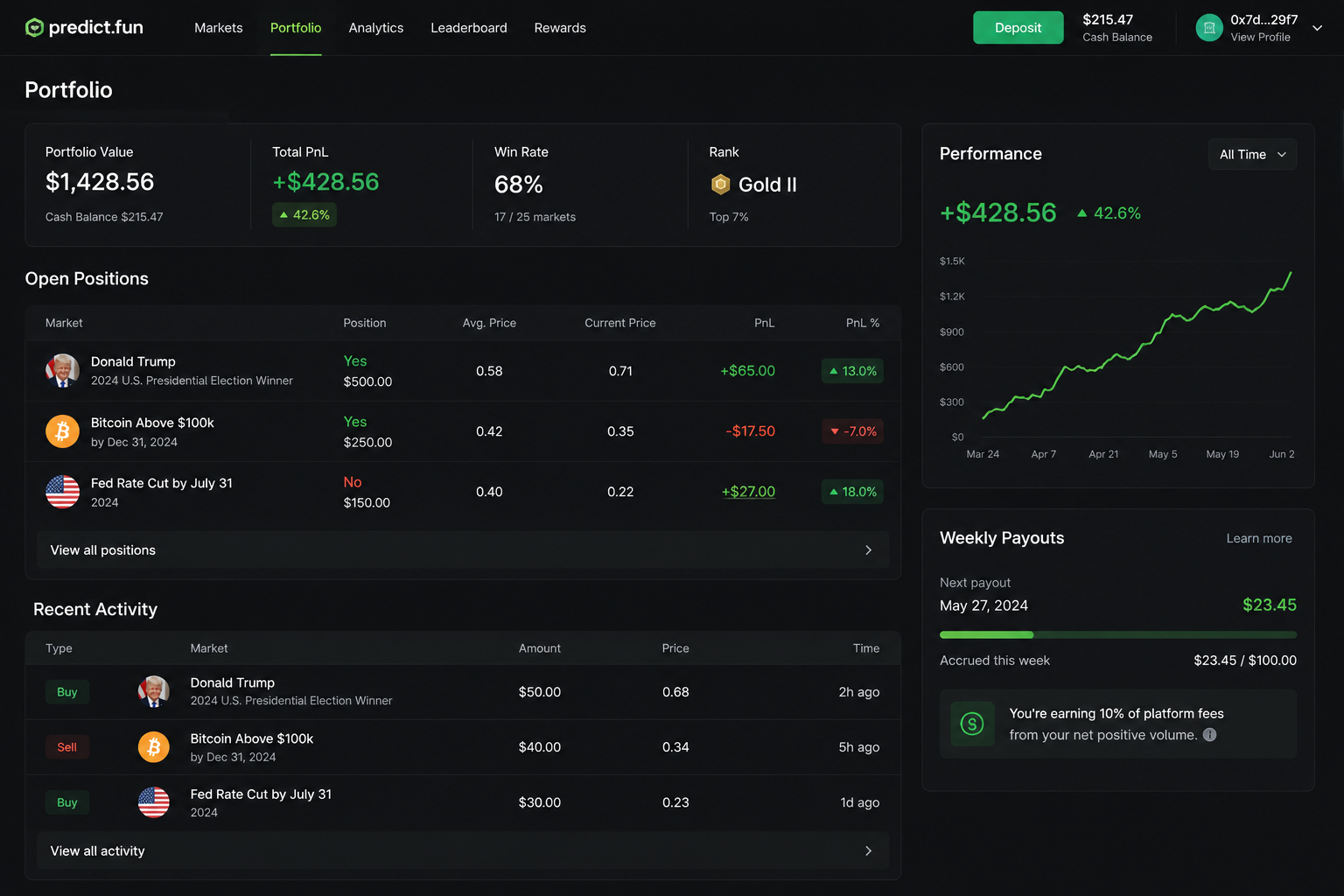
On Predict.fun, only markets marked with a Yield badge use the yield-bearing model. According to Predict.fun's yield guide, USDT collateral supporting eligible open positions is routed through Venus Protocol on BNB Chain. Not every market qualifies, and the available set can change.
According to Predict.fun's yield documentation, the yield rate is variable and depends on conditions in the relevant Venus Protocol pool. The same documentation states that a 10% management fee is deducted from generated yield rather than from principal. These are provider statements, not an independent guarantee of yield, liquidity or safety. Readers should verify the current rules before depositing funds.
The platform warns that a liquidity crunch at Venus can delay claiming on affected yield-bearing markets. Users must also consider the event outcome, their ability to exit a position, the stability of USDT and the technical and resolution processes involved. A yield feature does not offset a losing event position or remove protocol risk. Documentation checked September 29, 2026.
| Risk | What it means for a user |
|---|---|
| Event outcome | The position can lose value or settle against you. |
| Market liquidity | Exiting before resolution may require accepting a worse price. |
| Smart contracts | A contract failure or exploit could affect funds or execution. |
| Oracle and resolution | An ambiguous outcome or disputed result may delay settlement. |
| USDT | A stablecoin may lose its intended dollar peg. |
| Venus and yield | Variable returns, protocol problems or a liquidity crunch may reduce or delay the expected benefit. |
| Regional eligibility | Access to a product or funding route may be restricted. |
Predict.fun Trading Fees
Predict.fun distinguishes between makers, whose orders rest on the book, and takers, who fill existing orders. Its fee guide says takers pay a trading fee, while makers pay no trading fee and may receive a rebate. The taker fee is not one flat percentage across every order; check the amount displayed for your trade.
Trading through the Predict Smart Wallet or Binance Wallet is described as gasless: users do not pay a separate network fee for those trades. Gasless does not mean fee-free. Taker fees may still apply; traditional Web3 wallets and some funding or withdrawal routes may involve network costs, third-party charges or cross-chain slippage. Documentation checked September 29, 2026.
Gasless execution removes one network-fee step for supported wallets, but it does not remove taker fees, spread, funding costs or other third-party charges.
Predict.fun's Position in the Market
Predict.fun is still a younger platform than Polymarket and Kalshi, so its main competitive advantage is not the size or age of its brand. Its advantage is strategic focus. It is building around a specific ecosystem and a specific type of user: people who already understand stablecoins, wallets, short-duration markets and DeFi applications.
The Binance Wallet connection is important because distribution can be as valuable as technology. A technically strong market that users never discover will struggle to grow. By appearing closer to an existing wallet environment, Predict.fun can reduce the number of steps between discovering an event market and opening a position.
That convenience should still be evaluated alongside the risks. A wallet integration does not remove market risk, smart-contract risk, oracle risk or the possibility that a user misunderstands the event rules. It only changes the path through which the user reaches the platform.
My overall view of Predict.fun is positive. It has a clear identity, a relevant BNB-native distribution strategy and a feature that directly addresses the problem of idle collateral. I would not recommend treating the yield component as a reason to ignore the underlying market quality, but I do consider it a meaningful innovation in how prediction positions can be designed.
“Predict.fun is most interesting when its market layer and DeFi layer are evaluated together rather than as separate features.”
— James Whitfield, PredictChoice analysisMetaculus Review: Forecasting, Scores and Community Predictions
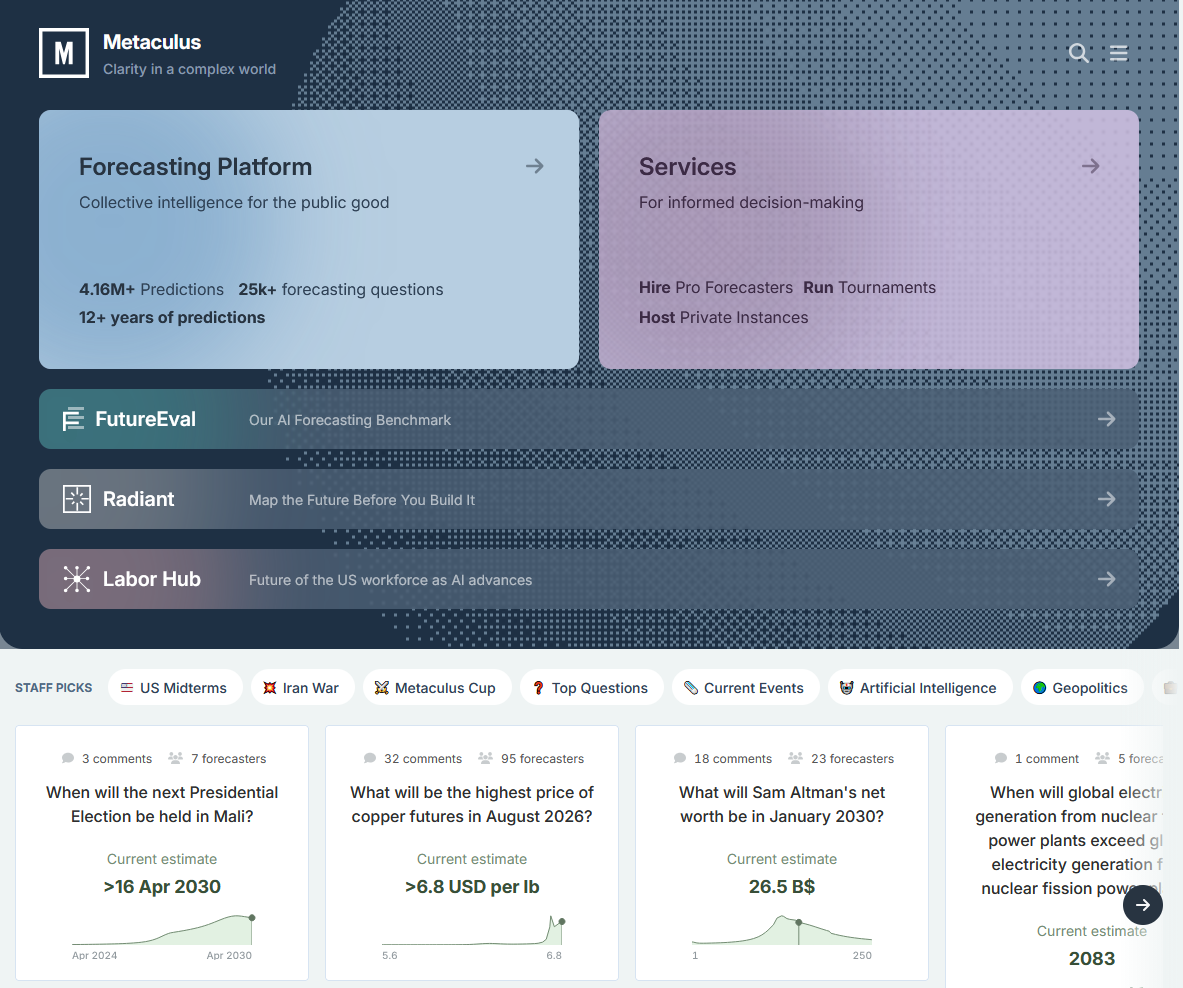
Metaculus is different from the first three platforms because it is not primarily a real-money exchange. It is an online forecasting platform and aggregation engine where users submit probability estimates about future events.
This difference is important enough to state clearly: Metaculus should not be judged by the same standard as Polymarket, Kalshi or Predict.fun. It does not compete mainly through trading volume, payment methods or contract liquidity. Its central product is a forecasting environment where users can develop a track record and compare their predictions with baselines and other forecasters.
How Metaculus Forecasting Works
A Metaculus question typically asks about an event that can be objectively resolved. Users submit a probability or distribution forecast, and the platform aggregates individual forecasts into a community prediction. According to Metaculus's Scores FAQ, its Community Prediction is a time-weighted median of forecasters' predictions on a question. This aggregate differs from a tradable market price; Metaculus also describes separate Baseline and Peer scores for evaluating individual forecasts. Documentation checked September 29, 2026.
This method is different from a financial order book. A user does not need to find a counterparty willing to buy or sell a contract at the same price. The user makes a forecast, and the platform evaluates that forecast later when the question resolves.
The result is a quieter and more analytical experience. There is no need to follow every tick of a price chart. Instead, the user is encouraged to explain assumptions, examine evidence and update a probability when the evidence changes.
Baseline Scores and Peer Scores
Metaculus uses more than one scoring perspective. Baseline scores compare a forecaster with an impartial reference point, while peer scores compare performance with other forecasters. Tournament rules can also use relative scoring.
This design solves one of the biggest problems in forecasting: people often remember their impressive predictions and forget their weak ones. A long-term scoring system makes it harder to build a reputation from one lucky call.
It also encourages calibration. A person who gives 90 percent probabilities should be correct roughly nine times out of ten over a sufficiently large and appropriate sample. A person who constantly gives extreme forecasts that fail may sound confident, but the track record eventually reveals the difference between confidence and accuracy.
Why Metaculus Is Valuable Even Without Cash Payouts
A financial incentive is not the only possible incentive. Metaculus creates motivation through reputation, competition, learning and the opportunity to develop a measurable forecasting record. For people interested in science, technology, artificial intelligence, geopolitics or long-term social change, this can be more useful than a short-term trading position.
The platform is particularly attractive to users who enjoy questions that require research. A good forecast may require reading technical papers, following a policy process, checking historical base rates or distinguishing a plausible scenario from a popular narrative.
This makes the platform feel more like a laboratory for reasoning than a financial exchange. The user is not only asking “Which side should I buy?” but also “What evidence would change my estimate?” That is a more demanding question, and in my experience it produces better thinking.
| Feature | Metaculus | Real-money market |
|---|---|---|
| Main activity | Submit probability forecasts | Buy and sell event positions |
| Primary incentive | Skill, reputation and scoring | Financial outcome |
| Liquidity requirement | Not required in the same way | Important for execution |
| Best learning outcome | Calibration and evidence evaluation | Pricing, execution and risk management |
| Main limitation | No conventional cash settlement | Financial loss is possible |
Metaculus: Final Professional Assessment
Among the platforms in this comparison, Metaculus is specifically designed for users who want to practise forecasting and track their performance. It does not offer the immediate excitement of a live cash market, and that is exactly why it should not be judged by the same criteria.
I view Metaculus as a strong complement to Polymarket and Kalshi. Someone can observe a market probability on one platform, create an independent forecast on Metaculus and later compare the two approaches. The market reveals a tradable consensus; Metaculus reveals how an individual forecaster performs over time.
The main barrier is the learning curve. A casual visitor may find scoring terms, forecast distributions and question-resolution rules less intuitive than a simple Yes-or-No contract. But users who stay with the platform gain something that is difficult to obtain from a normal trading interface: a structured record of their own reasoning quality.
Manifold Review: Mana, Market Creation and Resolution
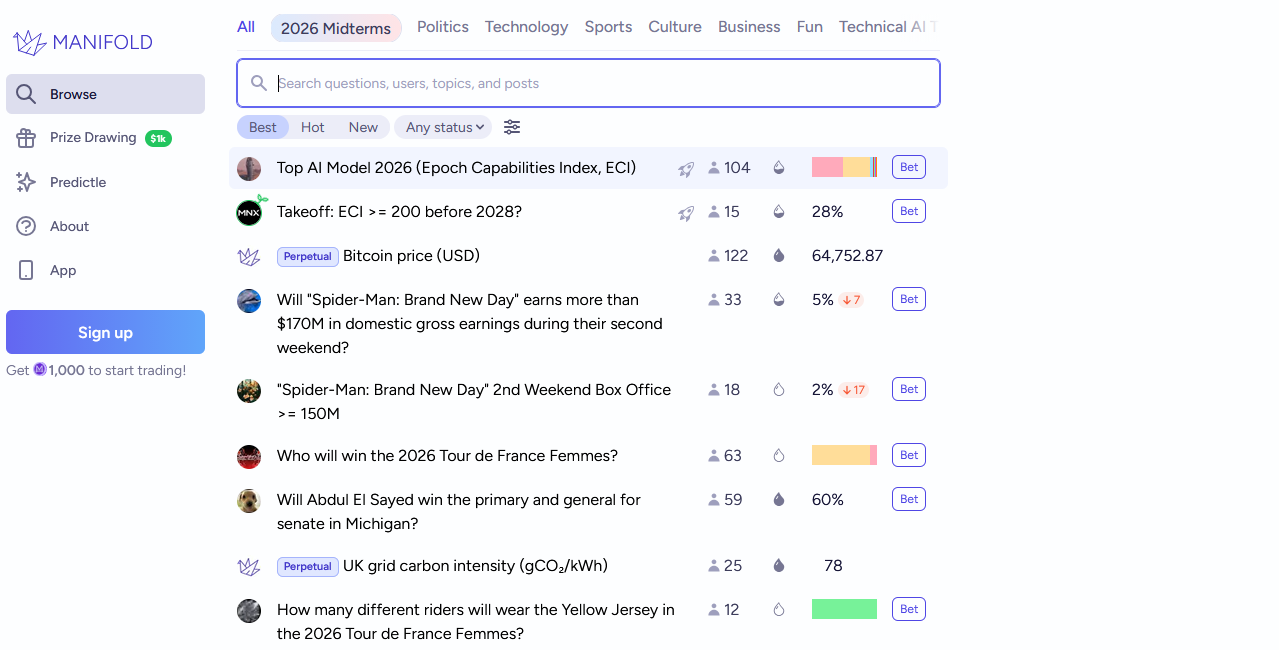
Manifold uses Mana as a play-money currency for community-created markets. Its FAQ says Mana cannot be converted into cash. Manifold also describes separate, optional prize drawings for eligible users; a prize drawing does not turn a Mana balance into a withdrawable cash balance. Documentation checked September 29, 2026.
This structure removes the financial barrier that exists on real-money platforms. A new user can practise reading probabilities, creating questions and understanding market movement without first choosing a payment method or transferring stablecoins.
The result is a platform that feels closer to a community laboratory than a conventional exchange. Users can ask questions about technology, online culture, media, science, personal projects, politics and many other topics, provided the questions comply with Manifold's community rules and have workable resolution criteria.
Manifold's strongest quality is openness. A commercial exchange has to consider liquidity, compliance, operational cost and legal suitability before listing a market. Manifold users can experiment with questions that would never justify a dedicated commercial contract.
The person who creates a Manifold market normally decides its resolution under the question's stated criteria. Manifold says moderators can review reports and overturn a resolution in exceptional cases, including abuse or an incorrect resolution. This flexibility makes creator reputation and clear question wording especially important. Manifold's resolution FAQ was checked September 29, 2026.
The trade-off is equally clear. Mana is not the same as money, and a market price on Manifold does not represent the same financial incentives as a cash market. A user may still care deeply about a prediction, but the price should not be interpreted as a direct equivalent of a dollar-settled probability.
For readers who want to practise without conventional cash-settled trading, Manifold provides a play-money environment for creating and exploring community markets. Its suitability depends on whether the reader values experimentation and social forecasting over cash settlement.
What Can Make a Prediction Market Unreliable?
Prediction markets can be useful, but they are not automatic truth machines. Their accuracy depends on the quality of the question, the information available to participants, the incentives created by the platform and the liquidity of the market.
Research supports a narrower conclusion than “prediction markets are always accurate.” In their 2004 review, Justin Wolfers and Eric Zitzewitz found that market-generated forecasts were often fairly accurate across the settings they examined, while also emphasising the role of market and contract design. In a separate study of Iowa Electronic Markets election forecasts, Joyce E. Berg, Forrest D. Nelson and Thomas A. Rietz found that the market was closer to the eventual vote share than a contemporaneous poll 74% of the time in their 1988–2004 sample. Neither result guarantees the accuracy of a particular contract or today's market price.
A professional reader should therefore evaluate the market itself, not only the brand hosting it. A famous platform can contain weak markets. A smaller platform can contain a carefully written question with a useful forecasting signal.
1. Low Liquidity
Low liquidity is one of the most common weaknesses. If there are only a few buyers and sellers, the displayed price may move sharply after a small order. This does not necessarily mean that new information has appeared. It may simply mean that the order book is thin.
Thin markets also make it harder to exit a position at a reasonable price. A user may be correct about the eventual outcome but still receive a poor execution price because the market does not have enough opposing orders.
2. Ambiguous Questions
A prediction market is only as clear as its resolution rule. Terms such as “official result,” “launch,” “approval,” “recession” or “winning” can have multiple interpretations unless the contract defines them precisely.
The strongest platforms publish specific sources, dates and conditions. Metaculus, for example, explains that questions are resolved according to the criteria in the resolution section and that ambiguous or annulled questions are not scored normally. Kalshi and Polymarket also require users to read the specific rules attached to each market.
3. Herd Behaviour and News Momentum
Markets can react quickly to new information, but they can also react quickly to attention. A dramatic headline, viral post or influential commentator may cause participants to move in the same direction before the underlying evidence has been checked.
This is not unique to prediction markets. The same behaviour appears in financial markets, social media and traditional news cycles. The advantage of a market is that the price can later correct itself. The disadvantage is that users who enter during a moment of excitement may be paying for sentiment rather than information.
4. Long-Horizon Events
Events that resolve months or years in the future can create a special problem. Participants may have to commit capital for a long period, and fewer traders may be willing to provide liquidity. The result can be a wider spread and a less stable market price.
This is why a long-term probability should not automatically be compared with a short-term probability as if both were equally easy to trade. The time until resolution affects liquidity, opportunity cost, volatility and the information available to participants.
5. Jurisdiction and Access
Prediction markets are affected by local regulation and platform eligibility rules. A service that is available to one user may not be available to another user in a different country or even in a different U.S. state.
This is particularly important when comparing Polymarket and Kalshi. Polymarket users need to check the platform's current geographic restrictions and wallet requirements. Kalshi users need to check eligibility, identity verification and which funding methods are available in their region.
| Risk | What it looks like | Practical response |
|---|---|---|
| Thin liquidity | Large spread and sharp movement after small orders | Check depth and use smaller positions |
| Unclear wording | Several possible interpretations of the outcome | Read the full resolution criteria |
| Headline momentum | Price moves rapidly after social-media attention | Separate new evidence from emotional reaction |
| Wallet error | Wrong token, network or deposit address | Verify every transaction detail before sending |
| Jurisdiction limits | Platform or payment method is unavailable | Check official eligibility rules first |
Which Prediction Market Is Best?
There is no universal winner because each platform is optimised for a different user objective. The right choice depends less on the platform's marketing language and more on the kind of participation the reader wants.
Choose Polymarket If You Want Broad Event Coverage
Polymarket may suit eligible readers who want to follow widely discussed events through a crypto-based market. Its event coverage and on-chain settlement are relevant to that use case, but the liquidity, spread and costs of a specific market still need to be checked.
The trade-off is that users need to understand wallets, stablecoins, network selection and regional restrictions. For an experienced crypto user, those requirements may feel normal. For a complete beginner, they can create unnecessary friction.
Choose Kalshi If You Want Regulated Dollar Contracts
Kalshi may suit eligible readers who prefer dollar-denominated event contracts within a CFTC-designated exchange framework and do not want to begin with a crypto wallet. Available contracts, funding methods and fees depend on the user and the specific market.
Kalshi is less open-ended than Manifold and less global in feel than an on-chain platform. However, that narrower structure is part of its strength. The product is easier to explain, easier to connect to traditional finance and supported by formal contract documentation.
Choose Predict.fun If You Are Already in the BNB Ecosystem
Predict.fun may suit eligible users familiar with BNB Chain, supported stablecoins and crypto wallets. Its documented yield feature applies only to eligible markets and adds protocol risk; it should not be treated as a reason to overlook the event position or trading costs.
The reader should still separate the prediction-market thesis from the yield thesis. A position can be attractive because of the event probability, the trading price or the market structure. Yield may improve capital efficiency, but it introduces an additional protocol layer that must also be understood.
Choose Metaculus If You Want to Become a Better Forecaster
Metaculus may suit readers who want to submit probability forecasts, examine their track record and learn from scoring rather than trade conventional cash-settled contracts.
It is particularly valuable for researchers, analysts, students and anyone who wants to reduce overconfidence. The absence of a normal financial payout is not a weakness for this audience. It allows the user to focus on the quality of the forecast itself.
Choose Manifold If You Want to Learn and Create Markets
Manifold may suit readers who want to create or explore community markets using play-money Mana rather than a conventional withdrawable cash balance. Market quality and resolution rules can vary between creators.
The crucial limitation is that Mana is play money. A probability on Manifold can be interesting and useful, but it should not be treated as equivalent to the price of a dollar-settled or stablecoin-settled contract.
| User objective | Option to consider | Reason |
|---|---|---|
| Follow major global events | Polymarket | Crypto-based markets covering widely discussed events |
| Use regulated dollar contracts | Kalshi | CFTC-regulated exchange structure |
| Use BNB Chain and stablecoins | Predict.fun | BNB-native access and eligible yield markets |
| Improve forecasting skill | Metaculus | Scoring, calibration and research questions |
| Practise without normal cash risk | Manifold | Free Mana and user-created markets |
Final Comparison of the Five Platforms
The five services in this guide use different models. This comparison separates crypto-based event trading, a CFTC-designated dollar exchange, a forecasting and scoring platform, and a play-money community market. The useful choice depends on the reader's goal, eligibility and tolerance for the relevant risks.
Polymarket is an on-chain platform for trading event outcomes. Its strength is the combination of major-event coverage, active public attention and blockchain-based settlement. Among the five services reviewed here, Kalshi is the closest to a conventional real-money exchange, with a CFTC-designated framework and dollar-settled event contracts.
Predict.fun combines BNB Chain markets, supported stablecoin funding routes and a yield feature for eligible positions. These features distinguish its model in this five-platform comparison, but do not establish that it is safer, cheaper or more liquid than another service.
Metaculus focuses on forecasting skill through scored predictions. Instead of asking users to risk money, it asks them to make measurable probability estimates and learn from their performance. Manifold is the most open and social platform, giving users an easy way to create markets, explore unusual questions and practise the basic logic of prediction markets.
| Platform | Core model | Relevant feature | Reader who may find it useful |
|---|---|---|---|
| Polymarket | On-chain real-collateral market | Broad coverage and market visibility | Experienced crypto-native trader |
| Kalshi | Regulated dollar event exchange | Clarity and formal market structure | Eligible traditional-finance user |
| Predict.fun | BNB Chain prediction market | Capital efficiency and ecosystem access | Stablecoin and BNB user |
| Metaculus | Forecasting and scoring platform | Calibration and research quality | Serious forecaster or analyst |
| Manifold | Social play-money market | Creativity and low entry barrier | Beginner and community creator |
The Most Important Lesson for New Users
The most important lesson is that a prediction market is not just a place where someone guesses the future. It is a system with rules, incentives, liquidity, participants and a settlement process. The quality of the final probability depends on all of those components.
A new user should therefore start with the question rather than the brand. What exactly is being measured? Who is allowed to participate? What asset or currency is involved? How are fees charged? What source determines the result? What happens if the outcome is delayed, revised or ambiguous?
Once those questions are clear, platform selection becomes much easier. Polymarket is not required for every user. Kalshi is not automatically better because it is regulated. Predict.fun is not suitable for every wallet holder. Metaculus and Manifold are not inferior because they do not work like cash exchanges.
Each platform is useful when used for the purpose it was designed to serve.
For eligible readers interested in crypto-based markets around widely discussed events, Polymarket is one option to examine alongside current liquidity, fees and resolution rules. For readers who prioritise dollar-denominated event contracts and a CFTC-designated exchange structure, Kalshi is the clearest fit among the five platforms reviewed here. This is an editorial use-case assessment, not a claim that it is safer, cheaper or better for every user. For BNB-native stablecoin trading and eligible yield-bearing positions, Predict.fun deserves serious attention. For developing forecasting skill, Metaculus is the closest fit among these five services for readers whose main goal is to practise forecasting and review scored predictions. For learning, experimentation and community-created questions, Manifold remains the most approachable option.
Used carefully, these platforms can provide more than a simple prediction. They can show how information changes, how confidence is formed and how people respond when the future is uncertain. That is the real value of prediction markets: not that they eliminate uncertainty, but that they make our expectations visible enough to examine.
“A good prediction market does not promise certainty. It gives uncertainty a price, a timestamp and a set of rules that can be examined.”
— James Whitfield, PredictChoice final analysisHow to Use This Comparison
Platform features, payment methods, fees, supported assets, geographic restrictions and market availability can change over time. Before creating an account or transferring funds, readers should confirm the current information directly through the official platform documentation and the specific market page.
This analysis is intended for educational and informational purposes. It is not financial, legal or investment advice. Prediction markets involve uncertainty, and real-money platforms can result in losses. A reader should use only a platform available in their jurisdiction and should never risk money they cannot afford to lose.